Pakistan: No secret clauses in Mecca Defense Agreement
Istanbul, October 23 (Hibya) - The spokesperson for Pakistan's Ministry of Foreign Affairs announced that the Mecca Joint Defense Agreement between Pakistan, Saudi Arabia and Türkiye consists of 16 articles and that Pakistan has approved the text submitted to the Turkish Parliament. The spokesperson said the agreement contains no secret clauses and that Pakistan remains open to dialogue with Afghanistan but expects cross-border terrorist threats to be brought under control.
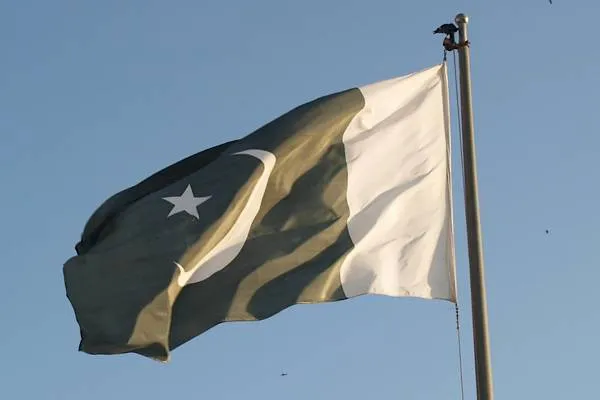
The spokesperson for Pakistan's Ministry of Foreign Affairs commented on the country's regional security, defense cooperation and diplomatic relations during a weekly press briefing held on October 23, 2026.
Responding to questions about the Mecca Joint Defense Agreement, the spokesperson said it reflects the commitment of Pakistan, Saudi Arabia and Türkiye to strengthening collective defense, deterrence and regional stability. The spokesperson confirmed Pakistan's approval of the 16-article text submitted to the Turkish Parliament and stated that the agreement contains no secret provisions.
Emphasizing that the agreement does not target any particular country, the spokesperson said it establishes a framework for mutual assistance in the event of an external armed attack. The nature and scope of assistance would be determined by the three countries following a joint assessment of the circumstances. The spokesperson described the agreement as defensive in nature and consistent with Article 51 of the United Nations Charter.
The spokesperson said discussions among the three countries regarding the agreement's implementation and ratification procedures were ongoing. Pakistan and Saudi Arabia had completed their ratification processes, while Türkiye was proceeding with its own legal procedures.
Addressing Pakistan's relations with Afghanistan, the spokesperson said the country supports resolving disputes through diplomatic means and had held talks with the Taliban administration in Afghanistan from 2021 until October of the previous year. Initiatives conducted through the Moscow Format, as well as in Qatar, Türkiye, Saudi Arabia and China, were also intended to achieve a negotiated settlement.
The spokesperson argued that the talks had failed to produce results because of the Taliban administration's position, reporting an increase in terrorist attacks in Pakistan and stating that more than 1,300 people were killed in such attacks last year. The spokesperson referred to findings in reports by the United Nations Monitoring Team and the US Special Inspector General for Afghanistan Reconstruction (SIGAR) concerning the presence of more than 20 terrorist organizations in Afghanistan.
Reiterating Pakistan's openness to dialogue, the spokesperson said Afghanistan must establish a credible mechanism to control threats originating from its territory.
Asked about disruptions at border crossings between Pakistan and Iran, the spokesperson said they did not have direct information about the current situation on the ground. However, the spokesperson noted that visitors and religious pilgrims continued to cross the border in both directions.
The spokesperson said Pakistan would comply with existing sanctions regimes under international and domestic law and emphasized the importance of developing diplomatic, economic and security relations with the United States. Pakistan remained in contact with both Washington and Tehran and was urging both sides to exercise restraint and pursue dialogue and diplomacy. The spokesperson added that implementing the provisions of the Islamabad Understanding could help reduce regional tensions.
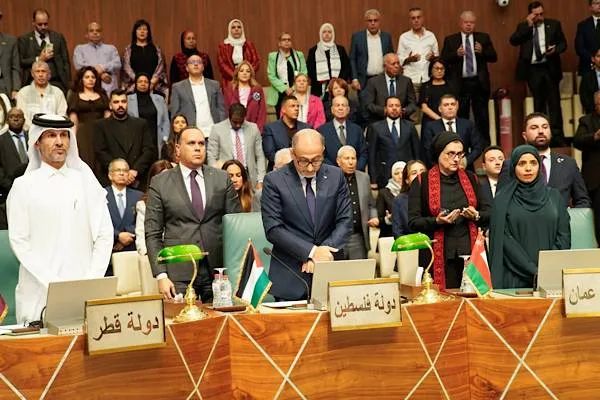
The spokesperson rejected criticism from India's Ministry of External Affairs regarding the Jammu and Kashmir resolutions adopted at the 52nd session of the Council of Foreign Ministers of the Organization of Islamic Cooperation (OIC), held in Baghdad.
Expressing Pakistan's support for the resolutions, the spokesperson argued that they were based on United Nations Security Council resolutions concerning the right of the people of Jammu and Kashmir to self-determination. The spokesperson called on India to fulfill its international obligations and create the conditions necessary for a peaceful settlement of the dispute.
The spokesperson also expressed concern over reports that an eviction notice had been issued for the historic Race Course Mosque in New Delhi, alleging that Muslim places of worship and waqf properties in India were being targeted. The spokesperson called on the international community to urge India to protect religious sites and minority rights.
Responding to a question about the possibility of another conflict with India, the spokesperson said Pakistan wanted disputes to be resolved peacefully in accordance with international law. However, the spokesperson said the possibility of renewed conflict could not be entirely ruled out and stressed that Pakistan was prepared to defend its sovereignty and territorial integrity.
The spokesperson highlighted the importance of Maldives President Mohamed Muizzu's state visit to Pakistan from October 20 to 22 in strengthening bilateral relations. Cooperation in trade, investment, health, education, tourism, agriculture, defense, maritime security and climate change was discussed during the visit, and 20 agreements and memoranda of understanding were signed.
The spokesperson noted that this was the first visit by a Maldivian president to Pakistan in 11 years and that it coincided with the 60th anniversary of diplomatic relations between the two countries.
The spokesperson said Pakistani President Asif Ali Zardari was making an official visit to Germany from October 22 to 24, with discussions expected to focus on trade, investment and economic cooperation. The spokesperson also recalled that Pakistan and Germany were celebrating the 75th anniversary of their diplomatic relations this year.
The spokesperson said Pakistan had held political consultations with Lithuania and Latvia, while the 10th round of the Pakistan-European Union Counter-Terrorism Dialogue took place in Islamabad on October 22. Pakistan and the EU agreed to strengthen cooperation in combating terrorist financing, radicalization and the misuse of cyberspace by terrorist organizations. The next meeting was scheduled to take place in Brussels in 2027.
It was announced that Pakistan, Qatar, Türkiye and Indonesia signed the "Badr" Multilateral Memorandum of Understanding in Doha on October 21 to expand cooperation in the defense industry.
The spokesperson said the memorandum provides a basis for cooperation in defense production, technical training, research and development, technological innovation and strengthening industrial capacity. The countries could combine their existing industrial capabilities and expertise to explore various cooperation models, including technology transfer, training and joint ventures.
It was also announced that Pakistan's Deputy Prime Minister and Foreign Minister Ishaq Dar had departed to attend the Regional Quartet (R4) and R4+E3 foreign ministers' meetings in Istanbul. The R4 meeting, comprising Pakistan, Saudi Arabia, Türkiye and Egypt, would be followed by an R4+E3 meeting with the participation of the United Kingdom, France and Germany. The seven countries would meet in this format for the first time.
Commenting on the Indus Waters Treaty, the spokesperson argued that the issue was not merely a bilateral dispute between Pakistan and India but could have broader implications for international law and the rules governing water sharing.
The spokesperson called for the involvement of the international community and relevant organizations, stating that Pakistan would not allow water allocated to it to be diverted elsewhere. Referring to an earlier warning by Pakistan's National Security Committee, the spokesperson said any diversion of water would be regarded as an act of war.
The spokesperson stated that Pakistan's foreign policy would continue to be guided by the principles of sovereign equality, mutual respect, dialogue and peaceful cooperation.
Usa News Agency
 Facebook
 Tweeter
 Whatsapp