Wadephul calls at UN for global safety standards for artificial intelligence
New York, September 27 (Hibya) – German Foreign Minister Johann Wadephul, speaking at the United Nations General Assembly, called for common safety requirements to be established for the most advanced artificial intelligence models and for such models to be tested before being released to the market.
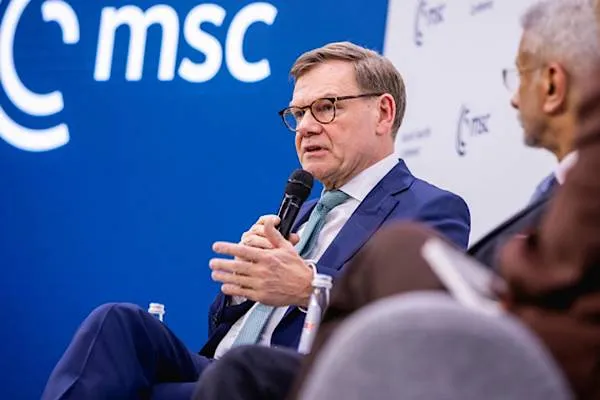
German Foreign Minister Wadephul said in his address to the United Nations General Assembly that common international rules should be developed to address the risks posed by artificial intelligence.
Stating that artificial intelligence has the capacity to affect economies, societies, and global peace and security, Wadephul said the technology also has the potential to accelerate scientific discoveries, improve health and education, support economic development and contribute to solving global challenges.
Wadephul said the concentration of power in the field of artificial intelligence in the hands of a small number of companies and countries creates significant responsibility at the global level, stressing that when power becomes global, responsibility must also be global.
Noting that the United Nations must keep pace with today’s technological developments, Wadephul said there is a need for a comprehensive reform process under the leadership of the new secretary-general. He said the gap between what is expected of the United Nations and the capacity provided to the organization must be closed in particular.
Wadephul said the United Nations Security Council’s occasional inability to function as the central decision-making body makes resolving conflicts more difficult, adding that reform of the Council should remain on the agenda.
Stating that Germany continues to support Ukraine’s defense against Russian attacks, Wadephul called on Russia to return to the negotiating table. He argued that the war in Ukraine affects the lives of millions of people, the existence of the Ukrainian state and the peace order in Europe.
Wadephul said Germany had increased its contribution to the international mission aimed at combating gang crime in Haiti, while on Sudan he stated that more than $1.7 billion had been mobilized with partners at a conference held in Berlin in April to address humanitarian needs.
Stating that global trade relations should be diversified and a fair trade order established, Wadephul said raw materials and supply chains should not be used as instruments of political pressure.
Wadephul also said international cooperation in technology should build countries’ capacities rather than create new dependencies.
Making a concrete call on artificial intelligence, Wadephul urged United Nations member states to work on common safety requirements for the most advanced AI models. He said these models should be tested before being released to the market and serious safety problems should be reported, adding that such requirements should be backed by effective oversight mechanisms at the national and regional levels.
Wadephul said accountability must be ensured in situations where artificial intelligence could affect global peace and security, stressing that ensuring technology serves human dignity is a shared responsibility.
At the end of his speech, Wadephul said the United Nations Charter and the Universal Declaration of Human Rights form the foundation of Germany’s understanding of the state, adding that even as technologies change, power must be constrained by responsibility and progress must serve human dignity.
Usa News Agency
 Facebook
 Tweeter
 Whatsapp