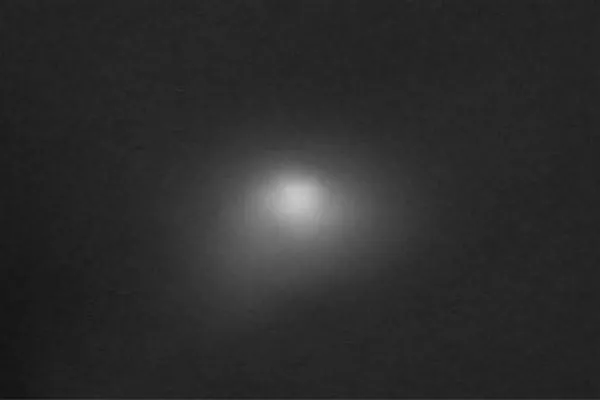
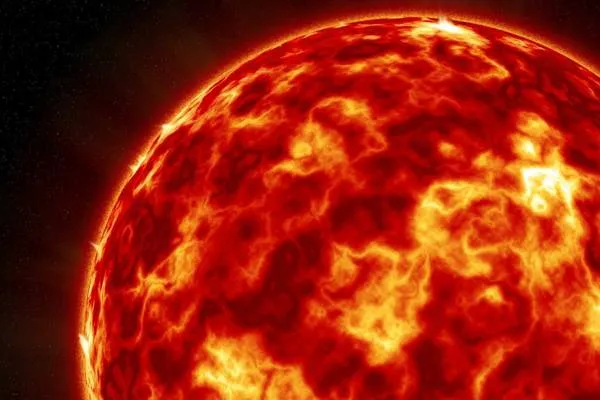
Very strong magnetic storms are expected on Earth on Tuesday
Moscow, January 19 (Hibya) – The Solar Astronomy Laboratory of the Space Research Institute (IKI) of the Russian Academy of Sciences said on its Telegram channel that due to a powerful solar flare, Earth could be exposed to G3/G4-level magnetic storms on Tuesday.
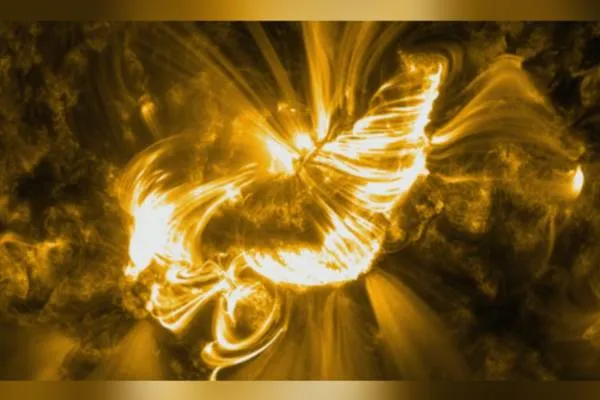
The statement said: “It is expected to reach Earth on Tuesday. The magnetic storms are forecast to be at the G3/G4 level. The lower boundary of the aurora zone may rise to as high as 50 degrees.”
According to the table on the laboratory’s website, G3 means a strong storm, while G4 means a very strong storm.
Another report noted that the solar flare was “quite large” and covered the entire central region of the star, “approximately half a million kilometers.”
Scientists also released a more detailed video of the solar flare. According to the statement, the horizontal size of the image is 450,000 kilometers, which is “35 times the diameter of the Earth.”
On Sunday evening, the laboratory reported the first X-class solar flare of 2026. The event occurred in region 4341 at the center of the visible solar disk facing Earth. It peaked at 21:09 Moscow time and was classified as X1.95; a stronger flare had last occurred on November 14.
According to laboratory director Sergei Bogachev, despite the decline in solar activity, the likelihood of record-breaking flares in 2026 continues. Several powerful M-class flares have already occurred since the beginning of the year.
Based on the intensity of X-ray emissions, solar flares are divided into five classes: A, B, C, M, and X.
They can trigger magnetic storms on Earth, disrupting power grids and affecting the migration routes of birds and animals. Severe storms can disrupt shortwave communications and navigation systems, and also cause power outages in industrial networks.
In addition, increased solar activity can expand the geographic range of aurora observations. Whether magnetic storms affect human health remains unclear.
Usa News Agency
 Facebook
 Tweeter
 Whatsapp