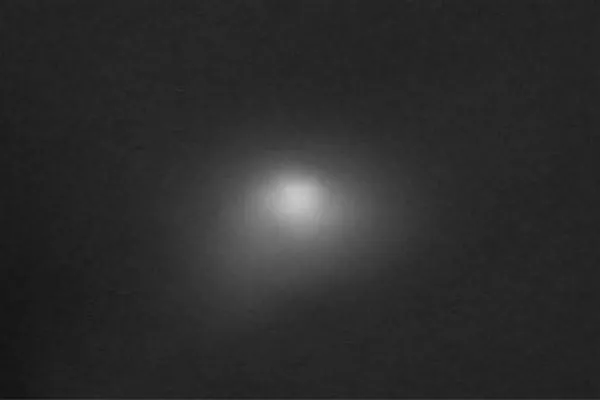
Harvard announces strange changes in comet 3I/ATLAS
Stockholm, January 18 (Hibya) – Harvard University astrophysicist Avi Loeb announced on his blog that a new anomaly has been discovered in the interstellar object 3I/ATLAS, related to changes in the surrounding cloud of dust and gas.
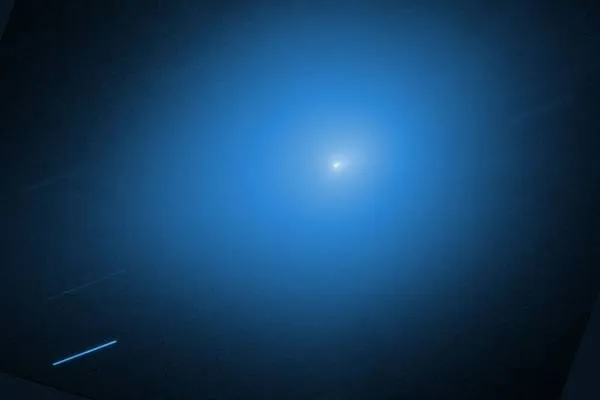
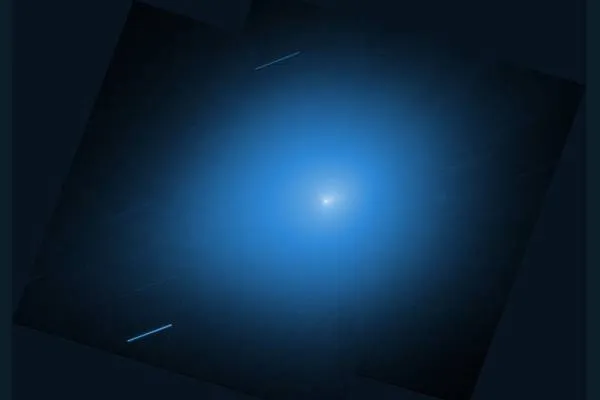
According to Loeb, scientists were surprised by the absence of traces of microscopic dust particles that typically enhance a blue glow through Rayleigh scattering. He noted that such particles are normally subjected to strong solar radiation pressure and form a classic comet tail pointing away from the Sun. However, 3I/ATLAS shows no such tail.
He believes this could indicate the presence of a significant dust mass around the object, with particles larger than those found in typical comets, explaining its unusual behavior.
Loeb also recorded changes in the brightness of the halo surrounding the object after its perihelion passage. Unusually—even for standard comets—it now emits diffuse light with bluish tones.
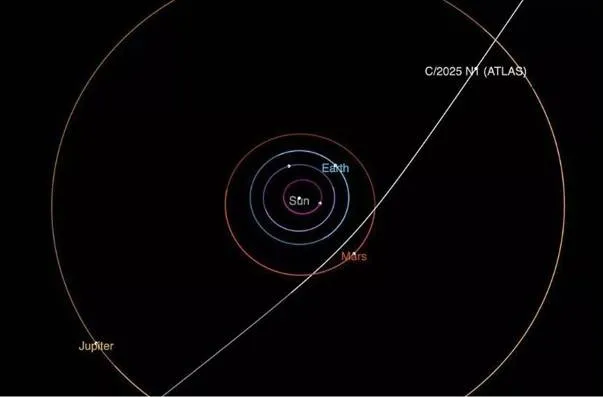
The interstellar object 3I/ATLAS was discovered on July 1. Scientists later determined it to be the third interstellar object ever discovered by astronomers, following the ʻOumuamua asteroid in 2017 and the comet 2I/Borisov in 2019.
Most scientists tend to believe it is an interstellar comet. However, Loeb argues that the object could be artificially created and, showing signs of an artificial origin, might be a massive “alien spacecraft.”
Anomalies had been noticed in comet 3I/ATLAS previously as well.
Usa News Agency
 Facebook
 Tweeter
 Whatsapp